A post by
Lucia Baier
Content Manager
YONTEX GmbH & Co. KG

What are all those people who are drinking less beer – or have stopped drinking it altogether – actually drinking? Which categories of drink are currently seeing an increase in sales volume? Which trendy drinks should you keep an eye on? This article provides an overview of current market developments and trends in the drinks industry. Trend analyses by thefoodpeople and the rheingold Institute, as well as market data from Statista, paint a clear picture.
Released on 17/06/2026

A post by
Lucia Baier
Content Manager
YONTEX GmbH & Co. KG
“The future of drinks will be shaped by the role they play in people’s lives.” This statement by Charles Banks, founder of thefoodpeople, sums up what is currently emerging from many conversations, market analyses and industry discussions: the drinks industry is shifting “from products to purpose”. Markets are increasingly changing in line with new needs. The focus is increasingly on consumption occasions, functions and experiences – and less exclusively on individual product categories.
Let’s start by taking stock. In which direction are consumption habits for alcoholic and non-alcoholic drinks in Europe currently heading?
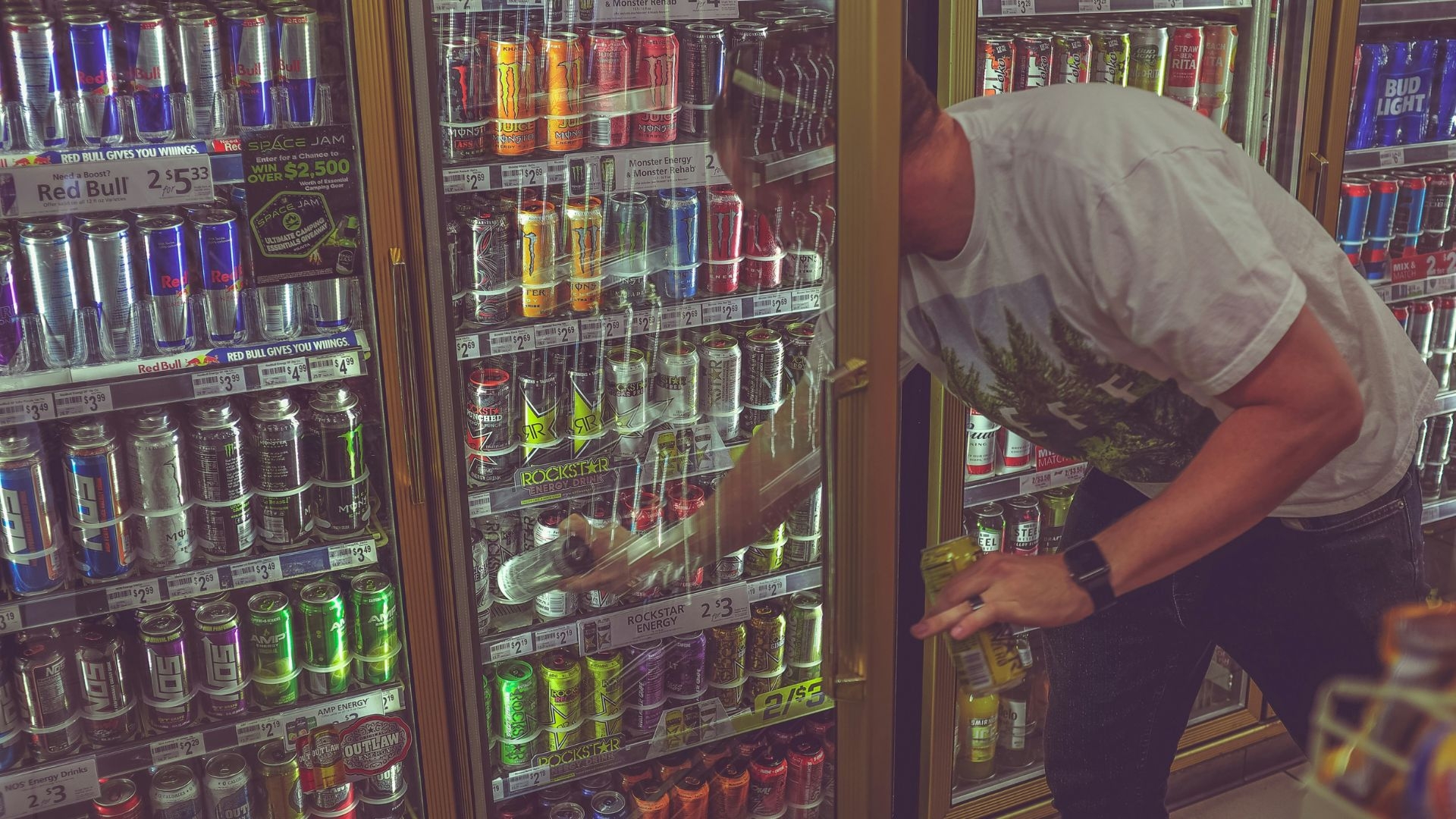
A few figures from Statista give an indication of where the industry is heading. For example, Red Bull’s global turnover has risen from EUR 2.1 billion in 2005 to almost EUR 12.2 billion in 2025 (1). One of the world’s largest brewing groups has also seen its turnover rise over the last 20 years, from around EUR 10 billion in 2005 to EUR 28.8 billion in 2025 (2). However, the rise in turnover was nowhere near as steep as that of the energy drink pioneer.
These two international brands have been selected as examples; if we look at individual markets, the trends of recent years become even clearer.
We did just that during our BrauBeviale meets Europe Tour, using analysis data from Statista. For the Eastern European markets, the following picture emerges, which highlights these trends particularly clearly.
Starting with the Czech Republic. The country remains a special case in the European beer market: according to the Independent Brewers of Europe Report, beer consumption in 2025 stood at 128 litres per capita. This means the Czech Republic remains the only European country with three-figure per capita consumption in the beer segment. At the same time, the importance of non-alcoholic alternatives is growing significantly. Per capita consumption of non-alcoholic beer in the Czech Republic stands at 11.6 litres – considerably higher than the European average of 2.7 litres. Energy drinks, too, at 9 litres per capita, have reached a level well above the European average of 6.4 litres. Ready-to-drink (RTD) coffee and tea drinks stand at 1.5 litres per capita and are also above the European average.
These figures tell more than just a story of growth in individual categories. They reveal a market in which consumers are switching more consciously between occasions: traditional and social for beer, functional and energising for energy drinks, and more conscious and flexible for non-alcoholic options. In the Czech Republic in particular, it is evident that established beverage culture and new consumption patterns can coexist. Beer remains deeply rooted in culture and emotion, whilst non-alcoholic and functional concepts are taking on additional roles in everyday life.
A look at neighbouring markets confirms this trend. In Slovakia, the per capita volume of non-alcoholic drinks in 2025 will stand at 186 litres, which is above the European average of 179 litres. Particularly striking here is the consumption of energy drinks at 12 litres per capita – a figure that exceeds both the European average and the figures for neighbouring countries, the Czech Republic and Austria.
Austria, in turn, holds a strong position in RTD coffee and tea drinks: at 2.1 litres per capita, the market achieves the highest figure in this category among the countries under review. Here, too, it is clear that functional, practical and occasion-specific drink offerings are gaining in importance.
Similar patterns are evident in other European markets. Poland is set to reach a total volume of 227 litres per capita for non-alcoholic drinks by 2025, which is well above the European average. Energy drinks there stand at just under 12 litres per capita and are forecast to grow by around 10 per cent by 2030. RTD drinks are also forecast to grow by 10.6 per cent in Poland by 2030.
Hungary and Croatia also demonstrate that the development of drinks markets is not linear, but must be considered on a case-by-case basis depending on the occasion, category and consumer needs. Hungary is set to reach a total per capita volume of 260 litres for non-alcoholic drinks by 2025, placing it well above the European average. In the soft drinks category, the country stands at 121.61 litres per capita; growth of 6.4 per cent is forecast by 2030. At the same time, juice and ready-to-drink (RTD) coffee and tea drinks are growing, albeit from lower levels.
Although Croatia lies below the European average for non-alcoholic drinks, it shows growth potential in soft drinks, mineral water and RTD concepts.
The key commonality across these markets is that traditional categories remain relevant, but their role is changing. Beer is a particularly good example of this. In many countries, it remains a segment with strong emotional appeal, representing heritage, craftsmanship, tradition and community. At the same time, non-alcoholic beer offerings are gaining in importance because they open up new consumption occasions: enjoyment without alcohol, social participation, conscious consumption and suitability for everyday life. In Poland, per capita consumption of non-alcoholic beer stood at 5.1 litres in 2025, in Hungary at 4.7 litres, in Austria at 3.5 litres, in Germany at 5.18 litres and in the Baltic states at 2.2 litres. The Czech Republic stands out in particular with 11.6 litres.
This trend fits into a broader psychological and social picture. Analyses by the rheingold Institute and thefoodpeople suggest that, in an increasingly complex world, consumers are focusing more strongly on what they themselves can influence: health, performance, flexibility and personal stability. At the same time, there is a growing need for community, a sense of belonging and familiar experiences. Beverages are thus increasingly situated at the intersection between self-optimisation and social enjoyment.
This creates new opportunities for beverage manufacturers, but also presents new challenges. Product portfolios must become broader, innovations must reach market readiness more quickly, and production processes must respond more flexibly to changing consumption occasions. Anyone wishing to cater simultaneously for non-alcoholic concepts, functional drinks, ready-to-drink (RTD) offerings, traditional beer culture and new moments of enjoyment needs technical solutions that make this diversity economically viable – from raw materials and recipes, through process technology, bottling and packaging, right through to automation, digitalisation and logistics.
“Consumers are no longer waiting for things to return to normal. They are adapting,” emphasises Charles Banks. This is precisely the key message for the industry: consumers have long since reassessed their needs. The task for manufacturers now is to address this development in terms of products, technology and strategy.
Under the theme “Time for Opportunities”, BrauBeviale 2026 will address these changes. From 10 to 12 November 2026, the trade fair in Nuremberg will bring together market insights, consumer perspectives and practical solutions across the entire value chain. The focus will be on topics such as new consumer habits, non-alcoholic concepts, flexible production requirements and the question of how manufacturers can economically cater to different consumption occasions.
A highlight of the programme will be the keynote speech by Charles Banks on 11 November 2026 at 11.30 am on the Main Stage in Nuremberg. There, he will outline how trends are developing and which key consumer themes will shape the drinks industry in the coming years. It’s well worth noting this date in your diary now!
Sources:
1. Statista. https://de.statista.com/statistik/daten/studie/257243/umfrage/umsatz-von-red-bull/
2. Statista. https://de.statista.com/statistik/daten/studie/258289/umfrage/umsatz-des-heineken-konzerns-weltweit/
Machine translated.
Lot size 1
A post by Patrick Schweizer

precision fermentation
A post by Lucia Baier
Key topic of BrauBeviale 2026
A post by Dr. Jörg Bückle
Market analysis
A post by Lucia Baier
