A post by
Thomas Birus
Dipl.-Ing. Food Technology
Product losses during the production and packaging process play just as important a role in the commercial success of the drinks industry as optimising energy use. Accurate data analysis provides a reliable basis for a company’s decision-making, ensuring that the right measures are taken in a well-considered manner.
Released on 18/08/2026
A post by
Thomas Birus
Dipl.-Ing. Food Technology
Suitable key performance indicators are essential for benchmarking in order to better assess a company’s own resource efficiency. These enable a beverage manufacturer to compare itself with competitors or within a group of companies with a similar product range and operational scale.
Possible key performance indicators include:
It is important to monitor these key performance indicators and optimise them where possible. A robust assessment can only be made if the entire life cycle—from raw material extraction, production and packaging through to transport, consumer use and disposal—is taken into account.
Data collection and analysis are therefore time-consuming, but in some cases yield measurable results in the short term, such as with water and wastewater volumes. A technically sound solution usually relies on a combination of prevention, reuse, recovery and efficient process management.
Resource efficiency not only reduces environmental impact but also inevitably lowers operating and disposal costs.
The following section highlights a number of examples – drawing on the areas of maintenance and cleaning, as well as packaging and transport – which offer potential for resource optimisation in beverage production.
Technical systems, equipment and operating resources must be kept in good working order or, in the event of a breakdown, brought back into operation immediately. Maintenance is structured around four basic measures: servicing, inspection, repair and improvement.
Consequential damage caused by a lack of maintenance is virtually unavoidable and often occurs unexpectedly. For this reason, maintenance plays an enormously important role in resource efficiency. Servicing and maintenance ensure smooth production whilst minimising resource losses.
Many managers from non-technical backgrounds are insufficiently aware of the significance of plant breakdowns. The resulting downtime costs can quickly run into tens of thousands of euros after just a few hours, due to staff costs and product losses. An inability to deliver is absolutely catastrophic, given the contractual penalties already stipulated in the terms of delivery and the risk of losing customers. Furthermore, short-notice repairs are often costly, as spare parts have to be airlifted in by helicopter. Service contracts should already list the delivery times for key spare parts in detail, so that the supplier can keep the appropriate items in stock.
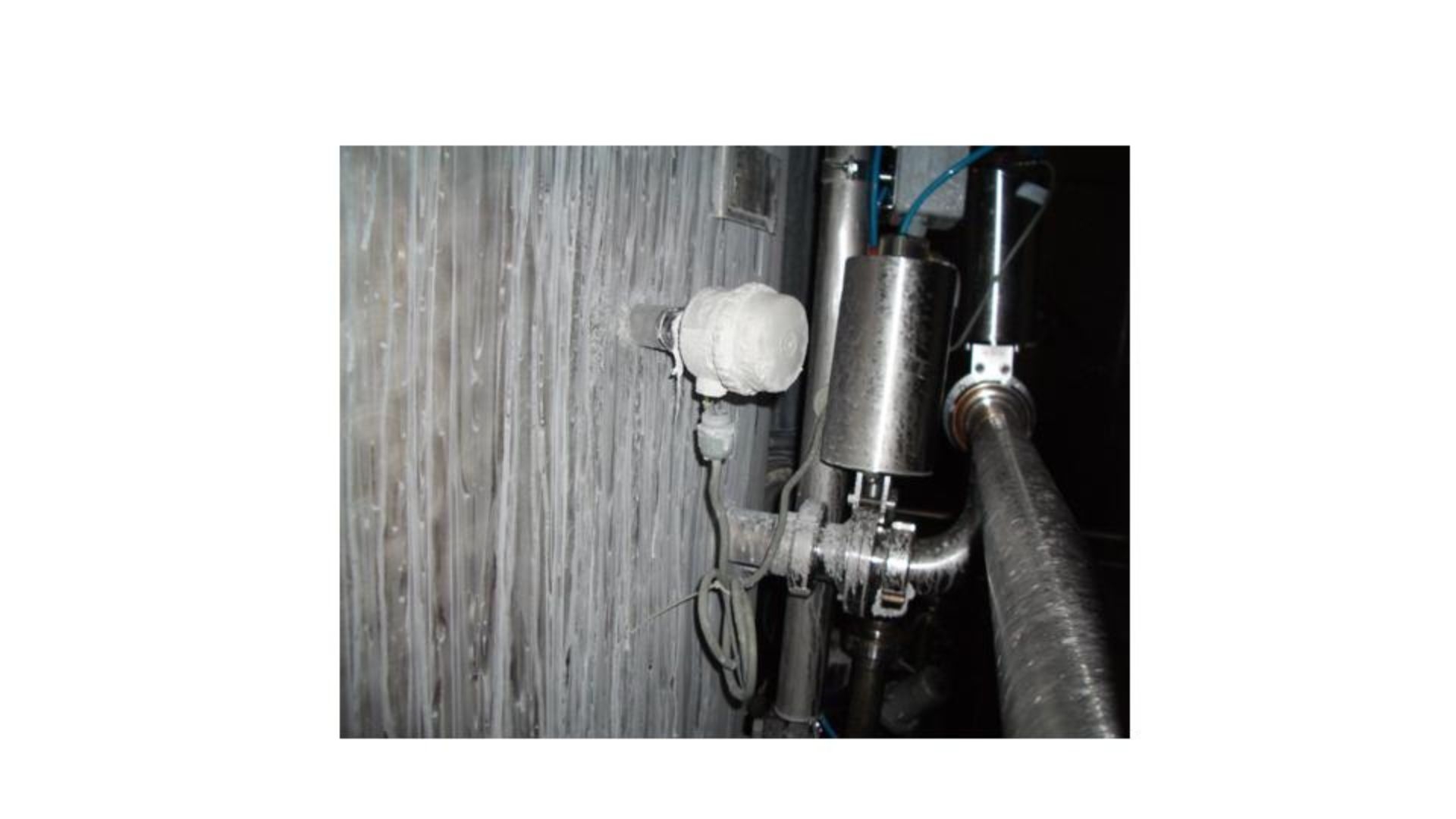
Fig. 1: Faulty cable connection on the conductivity meter
Bottle washing machines require fresh water, steam, electricity and cleaning agents. Such systems are particularly well suited to being analysed as ‘black boxes’.
It is therefore advisable to measure water consumption, steam pressure, and the inlet and outlet temperatures of water, lye, bottles, etc., as well as to check the electrical power consumption. A comparison with the system’s data sheet provides insight into any deviations that occur. Particular attention should be paid to the water consumption per bottle, as excessive quantities lead to higher steam requirements, as well as increased volumes of cleaning agents and waste water. The same applies to crate washing systems.
Two examples from everyday beverage production illustrate what matters in detail:
Example 1: During CIP cleaning, the phenomenon of a ‘sensor on the verge of failure’ is, unfortunately, a common occurrence. In this case (Fig. 1), the electrical signal for concentration measurement (note the cable routing) will, sooner or later, lead to an over- or under-dosing of cleaning agents. In day-to-day operations, too little attention is paid to this. Good staff management pays off here, as motivated staff report such faults. One idea would be to have trainees carry out an inspection of the condition of the production lines.
Example 2: A faulty electromagnetic flow meter (IDM) leads to incorrect measurement results. This is often due to a simple seal not having been replaced. As a result, liquid seeps into the IDM over weeks and months. Failure is inevitable and costs a considerable amount of money – ranging from microbiologically unsafe products due to insufficient flow velocity during cleaning stages to, in the worst-case scenario, the need for product recalls or recalls of goods.
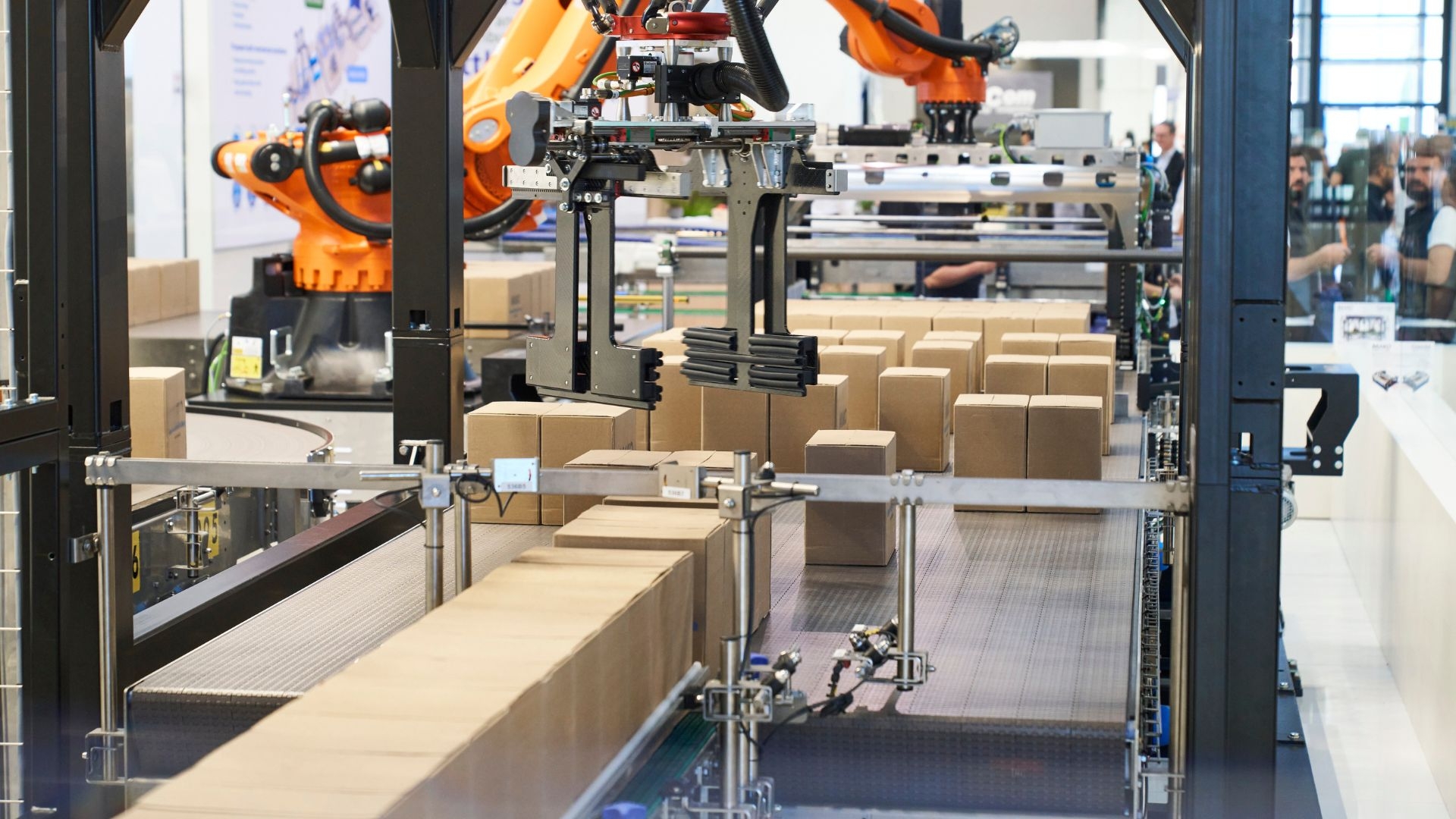
Another key factor in optimising resources within the drinks industry is the prevention of product losses during transport. Here, the automation of handling processes using robotics can help by ensuring reliable material flows and reducing transport damage.
The stability of the loading units is fundamental to preventing product losses. Even minor shifts in the position of crates or cartons on a pallet can cause packaging damage – and consequently waste – during transport, order picking or storage. The manner in which robots handle products on a packaging line therefore influences the incidence of losses and damage. Precise and repeatable movement sequences are particularly important when dealing with delicate units.
In most cases, industrial robots are limited to a few areas of application due to the tooling used. The tool is flanged onto the robot and may, for example, be a gripper for handling tasks such as assembling mixed cartons according to customer requirements, the season or promotional items.
Nowadays, it should be possible to change the tool even whilst the system is in operation.
In principle, robots are selected based on the type of payload, its centre of gravity and inertia, as well as the task area in which the process is to take place. Similarly, the process speed (cycle time) and the robot’s accuracy are important. A distinction is made between positional accuracy (pose) and path accuracy. To this end, both absolute accuracy and repeatability are determined. The latter is a measure of deviations, which is more important in packaging operations than absolute accuracy. The former can be optimised through robot calibration, whereas repeatability is essentially determined by gear backlash.
An example: depending on the model, a six-axis Kuka robot handles payloads of between six and 16 kilograms at reach distances of around 0.7 to 1.1 metres. Repeatability is within ±0.02 millimetres, which is sufficient for applications in the drinks industry.
The system designer must be familiar with the parameters mentioned so far. Furthermore, the type and nature of the surfaces that come into direct contact with the gripper are important. Changes to these parameters can lead to a significantly higher error rate. Even barely visible changes to the surface of a cardboard box and even (no joke) a different printing ink often have a negative impact on handling characteristics.
Optimising processes and resources throughout the entire beverage production chain, right through to the consumer, is a challenging and labour-intensive task. However, it pays off financially in the short and medium term at many stages of the process chain.
Sources:
www.kuka.com / KR-Agilus series
Thomas Birus: Automation in packaging technology
Machine Translated
Automatisation
A post by Helmut Brunner

Quality assurance
A post by Dr. Jürgen Hofmann
Process control
A post by Klaus Vette
Cleaning
A post by Thomas Birus
