- Broad range of exhibitors across the entire value chain
- Focus on specific operational challenges
- Beer, wine and non-alcoholic beverages: all beverage categories represented
Across the entire value chain, European beverage producers face a wide range of specific tasks and investment decisions. At BrauBeviale in Nuremberg from 10 to 12 November 2026, exhibitors will present solutions to these challenges. Examples range from new fermentation processes and non-alcoholic products to water treatment, cleaning technology and lighter reusable packaging.
769 exhibitors from 34 countries will show across eight halls what is shaping the beverage industry today. Around half of them are from abroad. The hall layout follows the process chain, leading from process and production technology through filling and packaging to logistics. The solutions are aimed at breweries, wineries and producers of non-alcoholic beverages alike.
The focus is always on practical implementation in day-to-day operations. “Many of the solutions at BrauBeviale do not start with abstract visions of the future, but with specific tasks in day-to-day operations,” says Markus Kosak, Executive Director of YONTEX GmbH. “This is not about one particular trending beverage. What matters is making production facilities flexible enough for producers to manufacture new product variants economically.”
New opportunities using existing infrastructure
New business areas do not necessarily require an entirely new production setup. This is demonstrated by a concept designed to make existing brewery sites suitable for other fermented foods. Many breweries already have suitable technical equipment and staff with experience in biological processes. Under certain conditions, this infrastructure can also be used for other products.
A modular bypass solution adds further process functions to existing tanks. An external unit handles sterile aeration, dosing, pH and temperature control, inline measurements as well as process data collection and automation. Suitable tanks can therefore be connected flexibly without having to upgrade each vessel individually.
Non-alcoholic beverages across the process chain
The market for non-alcoholic beverages also opens up new opportunities for producers to expand their portfolios.
One system on show at BrauBeviale, for example, combines nanofiltration with fractional vacuum distillation to reduce the alcohol content of fermented beverages. First, nanofiltration separates water and ethanol from more complex components such as sugars, acids, polyphenols and aromas. The ethanol-rich fraction is then distilled under vacuum. Water and volatile aromas can be recovered and returned to the product. The process is suitable for beer, wine, cider and other beverages and can achieve alcohol levels below 0.5 per cent ABV.
Non-alcoholic beers in particular place new demands on dispensing and hygiene. One dispensing solution therefore uses a beverage line that is replaced with every keg change. Conventional line cleaning is no longer required. At the same time, the system is designed to reduce the risk of bacterial contamination.
Using water, energy and cleaning agents more efficiently
Food and beverage plants generate water streams of very different qualities. One circular water concept addresses this challenge by separating water streams with different levels of contamination and treating them specifically for reuse. To achieve this, the system combines processes including biological treatment, ultrafiltration and reverse osmosis. Depending on the site, requirements and validation, the recovered water can then be used for applications such as cooling towers, boiler make-up, selected rinsing and cleaning tasks or other utility purposes. This reduces the need for fresh water.
Resource use can also be reduced when cleaning tanks. Compared with static systems, rotating jet cleaners require less time and fewer cleaning agents. The problem is that if rotation stops during the cleaning process, the failure may go unnoticed. A new patented sensor solution is designed to prevent exactly that. More than 1,000 optical measurements per minute detect without contact whether the cleaning jet is actually rotating. This is intended to make the technology suitable for applications where process and product safety requirements have previously favoured static systems.
Less weight, more cycles
Changes in packaging can achieve several goals at once. One example is thermally strengthened lightweight reusable glass bottles. According to the manufacturer, they are up to 30 per cent lighter than conventional reusable bottles. At the same time, their greater resistance to abrasion is intended to extend their service life. Lower weight also reduces the effort required for transport. The technology is now on the verge of moving into large-scale series production.
Another new development for the wine market shows how much difference even a few grams can make. A classic 0.75-litre Rhine wine bottle has been reduced to 350 grams while retaining the same dimensions. According to the manufacturer, this currently makes it the lightest Rhine wine bottle in Europe. Around 80 per cent of the material is recycled glass.
Three days for specific questions – and practical solutions
Producing new products on existing equipment, using less water, making cleaning processes safer or reducing packaging weight: exhibitors in Nuremberg are addressing issues that are already very real for many businesses. This is precisely where BrauBeviale sees its role as a working trade fair. From 10 to 12 November 2026 at the Nuremberg Exhibition Centre, beverage producers can meet suppliers, compare solutions and discuss what can be implemented in their own operations.
Press image
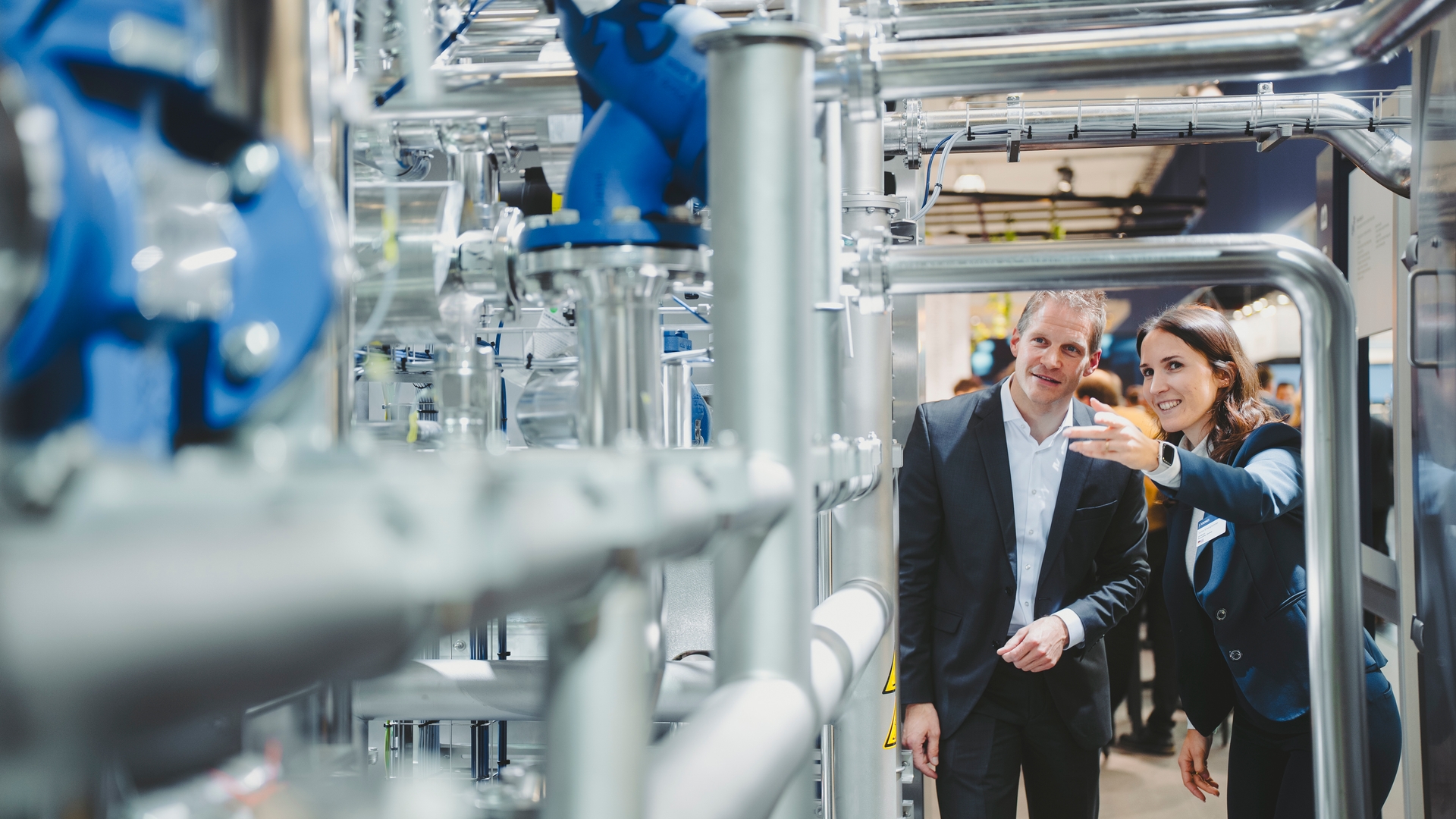
Caption: New products do not necessarily require new production facilities: from 10 to 12 November 2026, beverage producers can discuss directly at exhibitors’ stands how existing technology can be expanded. Photo: YONTEX GmbH & Co. KG / Heiko Stahl

Seden Kantarci, PR Manager
Press contact BrauBeviale
Do you have any questions about BrauBeviale? Seden Kantarci and our press team at TBN Public Relations GmbH will be happy to assist you with your coverage of BrauBeviale.