A post by
Annick Seiz
Ambassadress of Delight
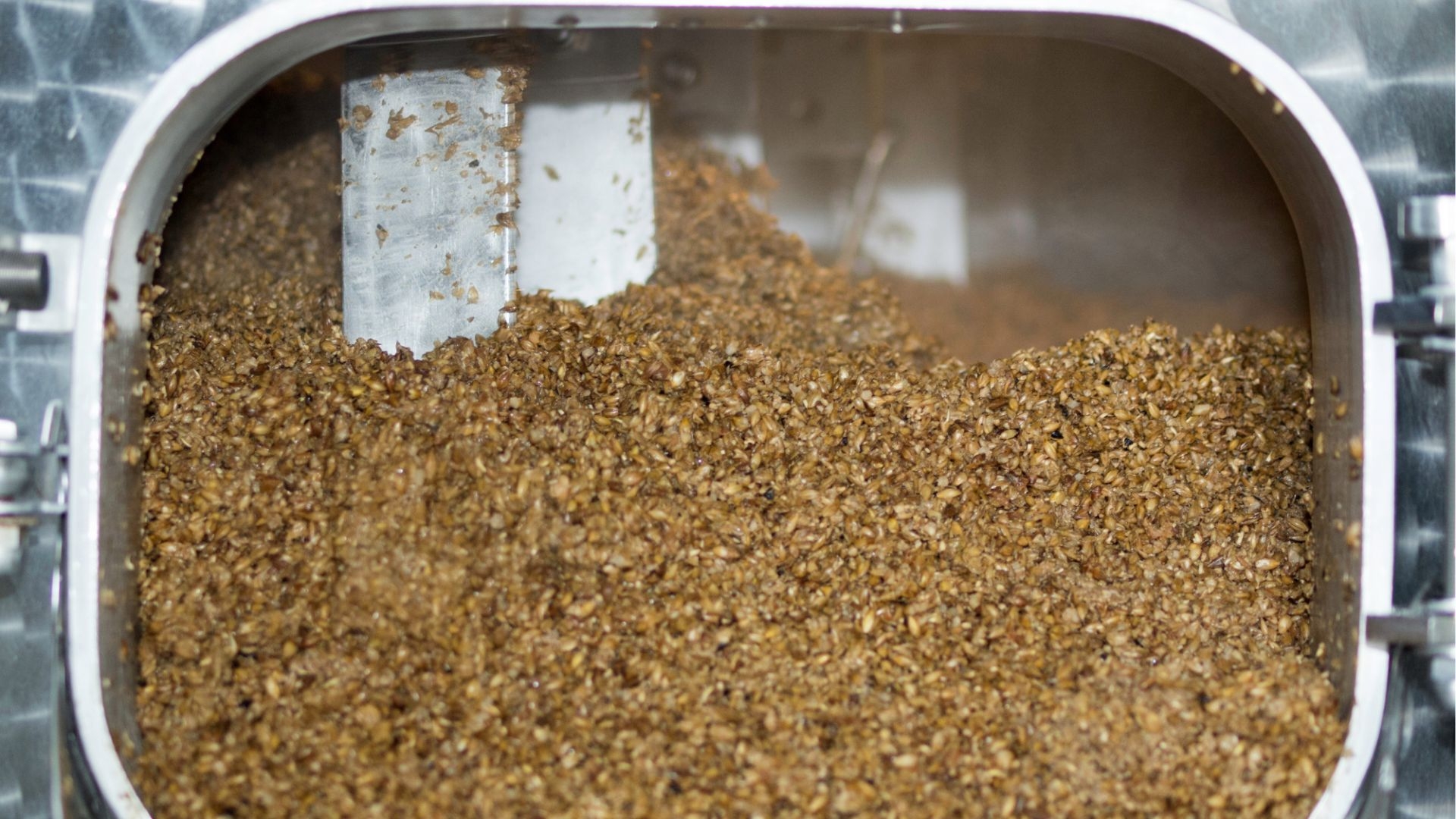
The global shift in the food and drink industry could be summed up by the motto ‘turn waste into gold rather than burn it’, because the future lies in upcycling. The aim here is to increase one’s own value creation by creatively transforming waste and by-products into new, sustainable consumer and industrial goods of a higher quality.
Released on 14/07/2026
A post by
Annick Seiz
Ambassadress of Delight
Residual and by-products
What was long regarded as waste is now becoming a valuable raw material for new business areas, against a backdrop of resource scarcity, climate protection and changing market conditions. Unlike traditional disposal or recycling – which, depending on the material, can result in a loss of quality – upcycling enhances the value of residual materials and returns them to the cycle as high-quality products.
From major challenges…
…great ideas emerge
Existing recycling measures are certainly sensible, but they can also represent a missed opportunity in the face of global resource scarcity.
The facts speak for themselves:
Sales of alcoholic beverages are declining worldwide. Manufacturers are seeking new ways to create value in order to remain competitive. Hardly any other sector is as drastically affected by the consequences of climate change as the wine, beer and fruit industries. Adapting to climatic conditions and investing in sustainable approaches are no longer merely an option for them, but an urgent necessity!
What are the arguments in favour of upcycling:
Instead of incinerating residues and by-products or using them in (intensive) livestock farming, it is more sustainable, more in keeping with the times and, above all, more lucrative to process them into food, packaging, cosmetics, clothing, furniture or even building materials. The potential is particularly great for beer, coffee and wine, as these sectors produce by-products in large quantities.
But how is this transformation achieved, and who are the driving forces behind this paradigm shift?
Brewer’s grains account for around 85% of all by-products from a brewery. Instead of being used as animal feed, they can be processed into protein snacks for athletes (e.g. Yeastup) or cosmetics (e.g. UpFiber). A pioneer in this field is the Swiss company UpGrain AG. The start-up operates what is currently Europe’s largest food upcycling plant. Each year, up to 25,000 tonnes of brewers’ grains are processed here into a special flour containing 27 per cent protein and 47 per cent fibre.
Other products include barley protein and barley fibre concentrates for the production of bread, snacks, pasta or egg and meat substitutes. With trendy products such as high-protein crisps made from brewers’ grains and yeast (e.g. Locher Brewery) or plant-based yoghurts, drinks and puddings (e.g. ProteinDistillery GmbH), the industry is right at the cutting edge.
Traditional plant engineering firms and brewery technology companies are increasingly focusing on the energy and material recovery of by-products from beer production, such as the biomass conversion of spent grain, malt dust and yeast into protein hydrolysate, mineral fertiliser and biogas. With such models, small to medium-sized businesses can save significant amounts of CO₂ annually, meet part of their energy requirements from their own production, and also market surplus raw materials.
In the USA, companies are also working on converting by-products from food production into new ingredients or consumer products, such as speciality flour made from spent grain or barley protein for sports nutrition.
The approach also works the other way round: in the UK, Toast Ale demonstrates how upcycling enables social commitment, a zero-waste policy and business success to go hand in hand. There, craft beer is brewed using, amongst other things, surplus bread rather than exclusively from barley. Bread that would otherwise often be thrown away in bakeries and supermarkets. Given the scale of global food waste, Toast Ale is an exemplary model of a circular economy in action. A portion of the profits also goes towards environmental projects.
A win on so many levels!
In Germany, vast quantities of coffee grounds are produced every year. Instead of disposing of this raw material as before, there are already several examples of creative upcycling in the German start-up scene. These include ‘Kaffeeform’. Founded in 2015 by Berlin-based designer Julian Lechner, the company moulds sturdy, dishwasher-safe cups and takeaway mugs from a mixture of 40 per cent coffee grounds and 60 per cent biopolymer. The coffee grounds are collected by cycle couriers from cafés, restaurants and roasteries, dried in a social workshop and then processed into granules using wood flour, cellulose and a plant-based polymer. Similar approaches can also be found at other companies that process coffee grounds into new materials or products (furniture, catering items).
Coffee grounds are also of interest to the cosmetics and food industries. The Danish company Kaffe Bueno utilises the antioxidants, fatty acids and exfoliating properties found in coffee grounds for scrubs, serums and other skincare products. Companies such as GroCycle (UK) use coffee grounds biotechnologically as a growth medium for oyster mushrooms, which are sold to restaurants as a vegetarian source of protein. The coffee cherry husk (cascara) is also making a comeback as a beverage ingredient and raw material: brands and companies are using it in lemonades or other food products.
The coffee sector thus illustrates particularly well how an everyday waste product can give rise to multiple stages of value creation. A product that used to be almost exclusively thrown away is now being transformed – through a combination of design, function and sustainability – into high-quality food, personal care and durable everyday products.
Residual materials from the food industry are also being trialled in the field of new materials for fashion and design.
Companies such as Arda Biomaterials (UK) and Vegea Srl (IT) are developing leather-like or fibre-based alternatives from organic by-products. Under names such as ‘New Grain’ or ‘Wine Leather’, beer spent grain and grape marc are being transformed into a leather-like material for vegan fashion items, trendy handbags, car seats and furniture. Until now, the wine industry worldwide has produced a significant surplus, which has traditionally been disposed of or processed into animal feed, marc (grappa), grape seed oil or grape seed meal. However, grape marc is rich in antioxidants and polyphenols. This is why cosmetics manufacturers such as the French brand Caudalie rely on grape skin extracts for high-quality anti-ageing products.
Even the road construction sector has taken notice of the by-products of winemaking: researchers at Chile’s Pontificia Universidad Católica are investigating the properties of grape marc as an asphalt stabiliser. Here, dehydrated grape marc is used, owing to its antioxidant properties, to delay the ageing of asphalt roads in particularly hot climates.
A particularly interesting and sustainable approach that exemplifies contemporary ‘outside-the-box’ thinking.
However, it is not only the upcycling of agricultural by-products from the drinks industry that forms part of the upcycling revolution, but also the use of natural biological materials such as algae. Algae are used to produce fabrics for sportswear and fashion, and as a plastic substitute, they are a highly exciting raw material. The British company Notpla Ltd produces biodegradable packaging films from algae to replace single-use plastic in sports stadiums. The Earthshot Prize-winning company has already replaced over 20 million plastic items in this way – a strong signal of the acceptance of sustainable materials and a call to the world to follow suit as quickly as possible.
In the drinks sector, unnecessary outer packaging is now being phased out; where it is necessary for transport reasons, sustainable materials and transport-optimised designs are being used. However, genuine upcycling can also be found here: Cologne-based Palurec GmbH manufactures new base products for the corrugated board industry from used PE drinks cartons. A transformation from packaging to packaging, so to speak. At an international level, examples such as the production of wood-free and biodegradable packaging material from organic waste, barley straw and banana fibres are particularly noteworthy.
Certifications, competitions and quality labels are an important step towards greater transparency and control. They help to raise the profile of sustainable products and build trust.
At the same time, even in this new business sector, it remains important to take into account and monitor issues such as product safety, allergen labelling, quality assurance and the risk of greenwashing.
Anyone who throws their waste materials in the bin is not only wasting valuable resources – but possibly also a brilliant business idea!
It is precisely these topics that will be discussed at BrauBeviale from 10 to 12 November 2026. In the Pilot Area in Hall 9, pilot projects such as ‘polymer’ from the University of Perugia, ‘Waste2Value’ from Weincampus Neustadt and ‘EAT BEER’ will be presented, all of which focus on creating value from spent grain and grape marc. It’s well worth attending …
machine translated

Raw material supply
A post by Horst Dornbusch
Wood essences
A post by Horst Dornbusch
Automatisation
A post by Helmut Brunner
Leergutmanagement
A post by Ingo Pankoke
