A post by
Dr. Jörg Bückle
Freelance author and industry expert
Breweries are currently preoccupied with the potential for optimising their processes. Where can adjustments be made? What further potential can be tapped? Product development, energy and resource efficiency are at the heart of these considerations. It is precisely for this reason that these topics will be the focus of BrauBeviale 2026. One theme keeps cropping up in various forms: creating value from by-products.
Released on 04/11/2026
A post by
Dr. Jörg Bückle
Freelance author and industry expert
Competitive pressure is constantly increasing. It is understandable, then, that breweries in particular are looking for ways to tap into new potential for creating value. It is also understandable that they would prefer to do so using familiar raw materials and existing technologies. Interestingly, taking a closer look at the ingredients of beer is quite helpful in this regard. In first place is water, an area in which breweries have built up a great deal of expertise in terms of both quality and marketing. In second place comes malt, and with it spent grain – a by-product that, with its high natural protein content, has a strong ace up its sleeve.
Roughly 200 grams of spent grain are produced per litre of beer. It is a natural cereal product in which the brewer is primarily interested in the starch – or sugar – content. Traditionally, the rest went into animal feed. The protein was then made available to humans via the detour of animal consumption. But isn’t there a more direct way, which would be a major advantage from many perspectives? Three graduates from the Technical University of Munich asked themselves this question and set about developing a milk alternative based on beer spent grain, founding the start-up ‘Circular grain’. After all, the common plant-based milk alternatives are based on raw materials such as oats, soya or almonds – and these have to be grown. They require land, water and fertiliser. Circular grain wanted to take a different approach: They simply wanted to use what was already there and turn it into something new. They opted for brewers’ grains.
The process is as logical as it is clever: after the lautering process, the proteins and fibre are extracted from the brewers’ grains using water; the solution is then filtered and processed with rapeseed oil and other additives, such as minerals, to create a creamy drink. From the lautering process straight into the glass, with no detours. Another advantage: as a by-product of beer production, the spent grain extract contains little sugar. This makes sense, as the sugar is meant to be metabolised by the yeast.
On the journey from idea to product, there were of course still a few hurdles to overcome. For instance, as the extraction rate increased, a bitter, grainy note emerged in the final product. This issue was successfully resolved. Since the beginning of November this year, ‘Trebermilch’ has been available on the market under the ‘Tremi’ brand, with a protein content of 15 grams per litre – which is around 50 per cent more than the average commercially available oat drink. And according to Circular Grain, that’s not the end of the story. Incidentally, the start-up is receiving support from the Amazon Sustainability Accelerator for its market launch. According to Amazon, the funding programme has been supporting sustainability-focused start-ups in Europe since 2022 and has backed more than 70 young companies to date.
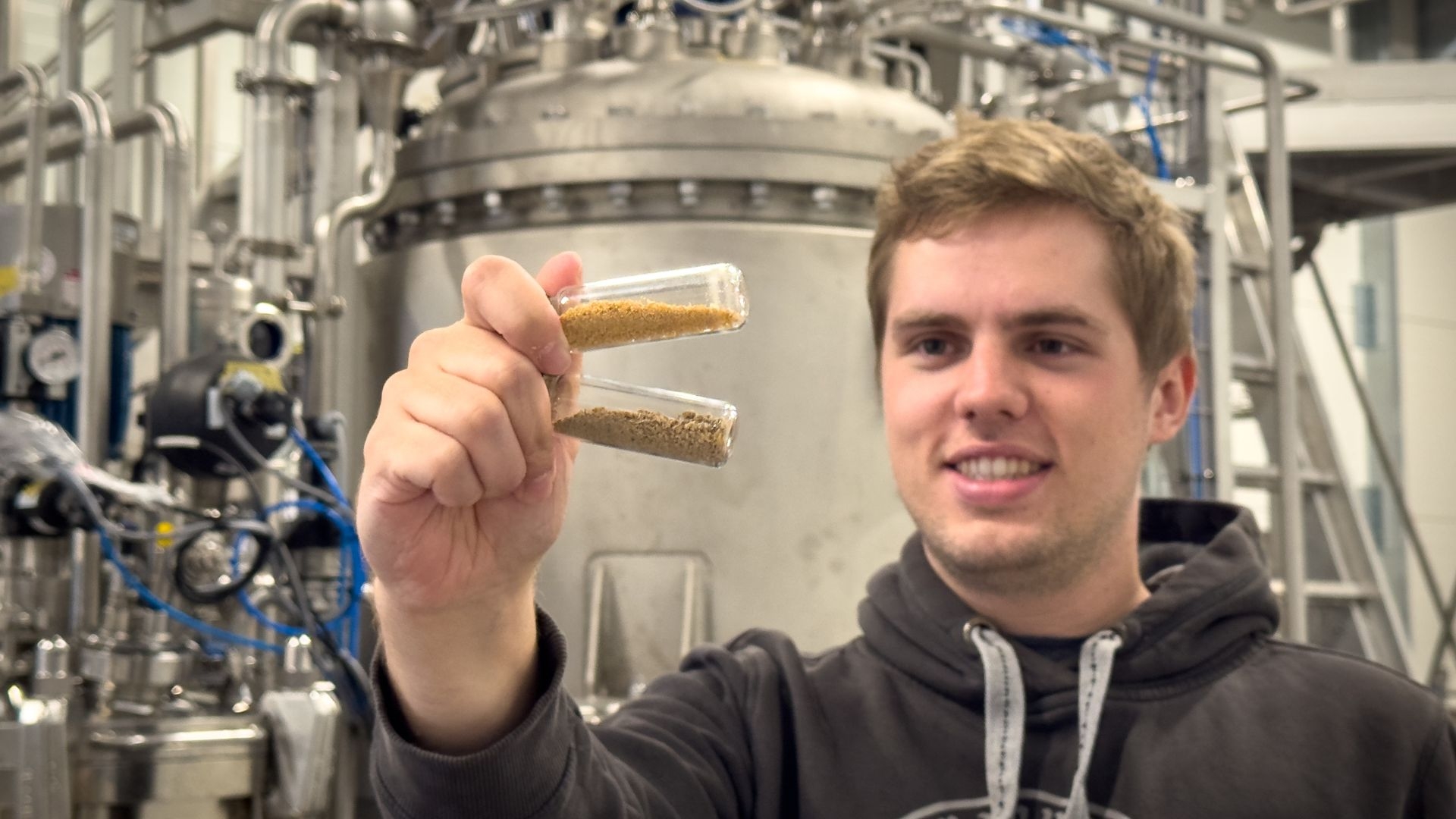
Eat Beer Biotech GmbH, the biotech sister company of Störtebeker Braumanufaktur, is also targeting the proteins in spent grain, but with a different approach. The company is working on extracting functional proteins for food from spent grain, thereby developing new by-product streams and value chains (see cover image). Eat Beer Biotech GmbH uses the spent grain produced during the beer-brewing process as a nutrient substrate. The mycelium of edible mushrooms, such as oyster mushrooms, is then cultivated on this substrate. This protein-rich biomass is subsequently used to produce ingredients for meat alternatives, baked goods, snacks and, in the future, other bio-based products.
In the Pilot Area at BrauBeviale, Eat Beer Biotech GmbH will be presenting this approach in detail. Do drop by and have a chat with the people behind the idea.
Another pilot project there demonstrates how biopolymers for packaging solutions can be produced from spent grain.
Don’t miss out: Pilot Area, Hall 9-631
Speaking of mushrooms: in the trade journal *Brauindustrie*, Gunter Pauli – who had founded the Zero-Emission Initiative at the United Nations two years earlier – described as far back as 1998 how spent grain, with its high fibre content, is the preferred staple food for mushrooms such as shiitake, oyster mushrooms and chanterelles. At the time, however, the focus was clearly on marketing the end product – the mushroom. But Pauli went one step further: he highlighted the possibility of extracting enzymes from earthworms that thrive on the residual proteins in the spent grain. Enzymes that, for example, were expected to generate an attractive contribution margin in detergent production.
But back to the here and now: scientists, for example in the 11/2019 issue of *Chemie Ingenieur Technik*, are proposing the use of spent grain press juice as a fermentation medium. The only problem is the lack of sugar. However, according to the researchers, the carbohydrates still present in the spent grain could be made usable at any time through hydrothermal and enzymatic saccharification and used as a basis for fermentation. This would result in platform chemicals such as lactic acid. Prebiotics and antioxidants could also be extracted from the spent grain press juice in their pure form for use as food additives. The TU Bergakademie Freiberg, for example, has published promising research findings on this.
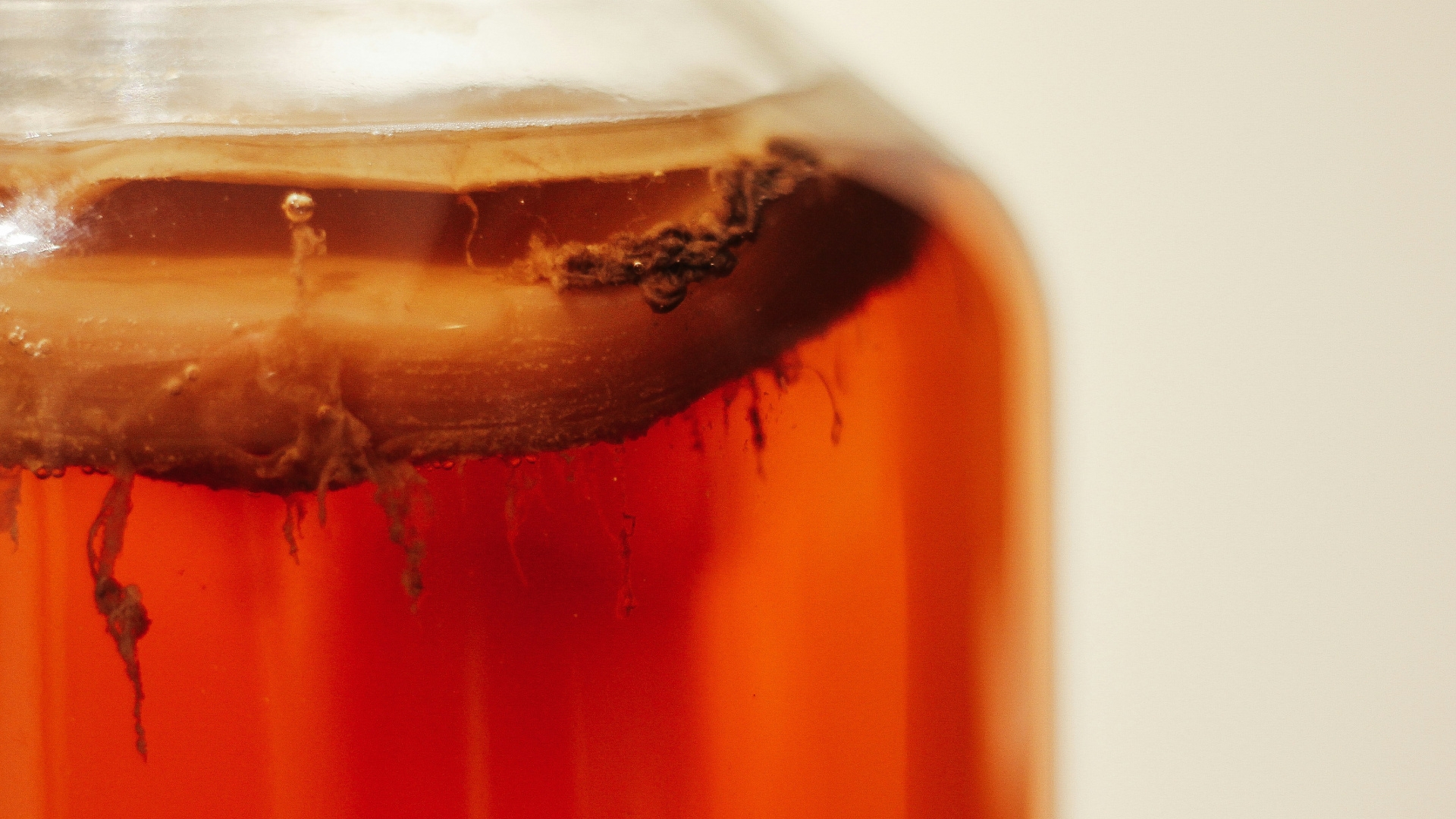
For a brewery in practice, however, these processes are still rather too complex. But it shows that spent grain, with its proteins, minerals and trace elements, is in principle a good basis for fermentation. As mentioned: it simply lacks fermentable sugar. But couldn’t one add this in the right proportion and then, for example, use kombucha cultures to produce an interesting beverage base from it? Particularly in today’s market situation, it is worth taking a look at all by-products. Because one thing remains indisputable: every euro saved on disposal or every additional contribution margin generated through moderate ‘upcycling’ improves the
operating profit disproportionately or, at the very least, provides additional security for it. From 10 to 12 November 2026, BrauBeviale at the Nuremberg Exhibition Centre will showcase the many fascinating aspects of what is currently possible in the field of by-product utilisation and the tools required to achieve it – for every manufacturer and bottler of beer, mineral water, soft drinks, juices, wine, sparkling wine and spirits.
You can find out even more about by-products at BrauBeviale in a presentation by Daniel Anthes on the topic: “More than just beer – Why & how by-products become a business model when output falls”. And in the wrap-up panel with the Pilot Area partners.
Biological process
A post by Oliver Kunz
Sour beer
A post by Kilian Kittl
Beyond beer
A post by Andreas Brandl

precision fermentation
A post by Lucia Baier
